



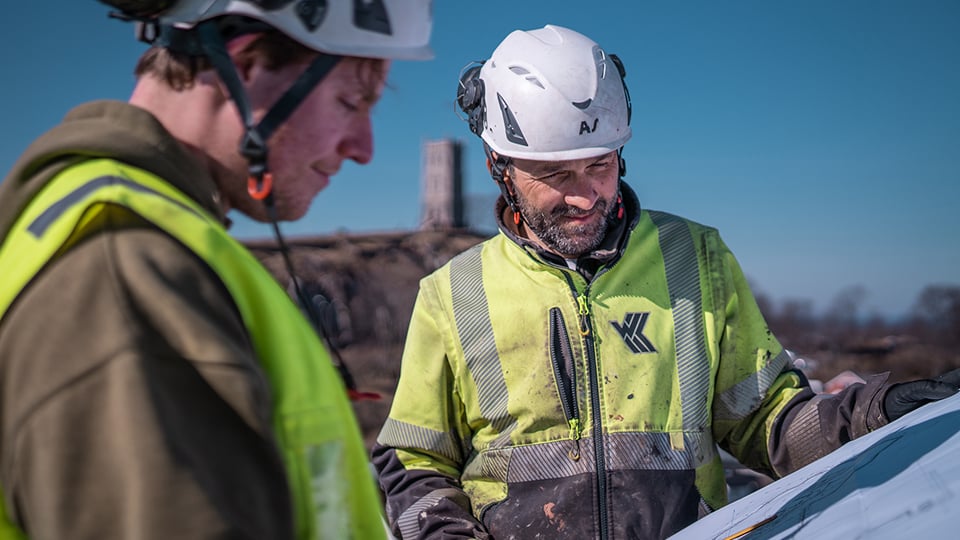
Step-by-Step Risk Assessment
Here is a simple and effective method you can use—even for short or routine tasks:
1. Assess the task and the area
A risk assessment begins by getting an overview of the surroundings and the work to be performed:
- What needs to be done, where, and by whom.
2. Identify the hazards
Look for all possible sources of injury or unwanted incidents. This includes factors such as:
- Falling objects, such as tools or materials.
- Physical strain, especially when carrying loads or working in awkward positions.
- Weather and visibility, such as wind, rain, or poor lighting.
- Proximity to live electrical installations, cables, or overhead lines.
3. Assess probability and consequences
- How likely is it that something will happen?
- What are the possible consequences if it does?
4. Determine measures
- Use of proper equipment (lift, scaffolding, fall protection equipment).
- Barriers, signage, training, etc.
5. Document the assessment
- This is not optional—you are required to document hazards, risks, and measures.
- Feel free to use a Safe Job Analysis (SJA) form.
Download a free SJA form from Trainor
6. Implement measures and monitor the job
- Ensure that the measures are actually followed up on, and that everyone knows what to do.
7. Evaluate and update as needed
- Conditions can change quickly. Update the risk assessment if anything changes along the way.
Remember: a risk assessment isn’t just paperwork—it’s life-saving work.
A good risk assessment doesn’t just reduce risk; it creates safety, predictability, and better collaboration among those working at heights.
In many cases, it can be tempting to “just get started,” especially on short jobs. But even small or short jobs can have serious consequences if something goes wrong.
Want to learn more?
Our Working at Heights course provides you with:
- Knowledge of regulations and requirements
- Practical skills in risk assessment and equipment selection
- An understanding of how to work safely—every time
Read more about the course here ➜
Related posts

Legislation for working at height: what you need to know
In this article, we take a closer look at the authorities' requirements and what they mean in practice.